
Filed Criminal Cases in District Court
Cloud County criminal court records are District Court records once the prosecutor files a complaint, information, or other charging document with the court. The Clerk of the District Court keeps the case file and docket at Cloud County Courthouse, 811 Washington, Suite P, Concordia, KS 66901, phone 785-243-8124. The court record is not the same as a sheriff booking record. Booking or custody information may exist before a filed court case appears online, while the criminal court record begins when the case is filed and then tracks the court process.
Cloud County is part of the Kansas 12th Judicial District. Kansas district courts are trial courts of general jurisdiction and can hear felony, misdemeanor, traffic-criminal, juvenile offender, and other criminal matters filed in district court. Concordia Municipal Court is separate and handles city ordinance and municipal traffic matters for Concordia. A city ordinance case may need the municipal court clerk, while county-filed criminal cases route through District Court and the Cloud County Attorney.
How to Search Cloud County Criminal Court Records
Use Kansas CaseSearch first for public district court criminal case information. The research confirms CaseSearch as the statewide district court public search URL, but direct inspection of live field labels was blocked during capture. That means a page should identify the official portal and the fallback chain without claiming unverified form behavior. If CaseSearch does not show a public criminal case, call or visit the Clerk of the District Court.
- Start with Kansas CaseSearch for public Cloud County District Court criminal cases.
- Confirm the case is a District Court case rather than a Concordia Municipal Court matter.
- Open the public docket to review charges, hearings, pleas, disposition, sentencing, and payment entries where available.
- For custody status, use the Cloud County jail phone or inmate records resources rather than the criminal docket alone.
- For certified copies or older documents, contact the Clerk of the District Court at 785-243-8124.
The Kansas criminal history record search is a statewide KBI channel, not the Cloud County court case file.
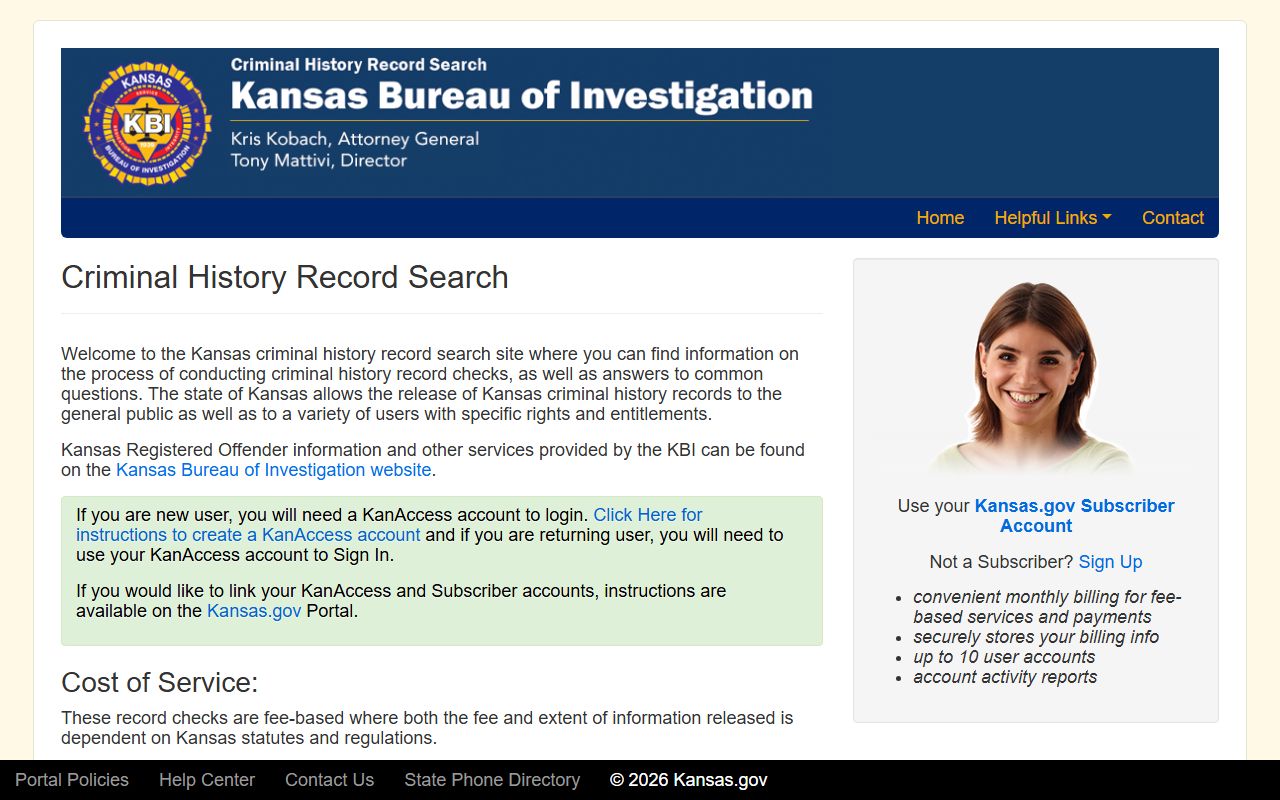
Use the court docket for the case-level record in Cloud County District Court, and use the KBI channel when the purpose is a statewide criminal history search.
Stages of a Criminal Case
A criminal court record changes as the case moves. The first public court entries usually come after a charging document is filed. Later entries may show the first appearance, bond conditions, arraignment, appointed counsel activity, motions, plea negotiations, trial settings, dismissal, verdict, sentencing, probation, fines, costs, restitution, or warrant events when public. A case can also be amended, continued, dismissed, diverted, or expunged if the law and court order allow.
Case flow: Charges Filed › First Appearance / Bond › Arraignment › Pretrial / Motions › Plea or Trial › Disposition › Sentencing
| Stage | What Happens |
|---|---|
| Charges Filed | The County Attorney files a complaint or information that opens the criminal case record in District Court. |
| First Appearance / Bond | The court addresses custody, bond, release conditions, counsel, and future hearing dates. |
| Arraignment | The defendant responds to the charge, often by entering a plea of guilty, not guilty, or no contest. |
| Pretrial / Motions | The parties file motions, exchange case issues, request continuances, or negotiate plea or diversion terms. |
| Plea or Trial | The case is resolved by plea, dismissal, bench trial, jury trial, or another court-approved outcome. |
| Sentencing | The court enters penalties such as jail, probation, fines, costs, restitution, treatment conditions, or supervision terms. |
County Attorney Role
The Cloud County Attorney is Robert Walsh, phone 785-243-8175. The County Attorney's office is the local prosecution office for many county criminal cases and is important because charges do not become a District Court criminal case merely because someone was arrested. A sheriff report, booking entry, or jail custody fact can exist before the prosecutor files a formal charge. The court file begins when the charging document is filed with the court.
The Cloud County Attorney page lists the prosecution office contact and hours.
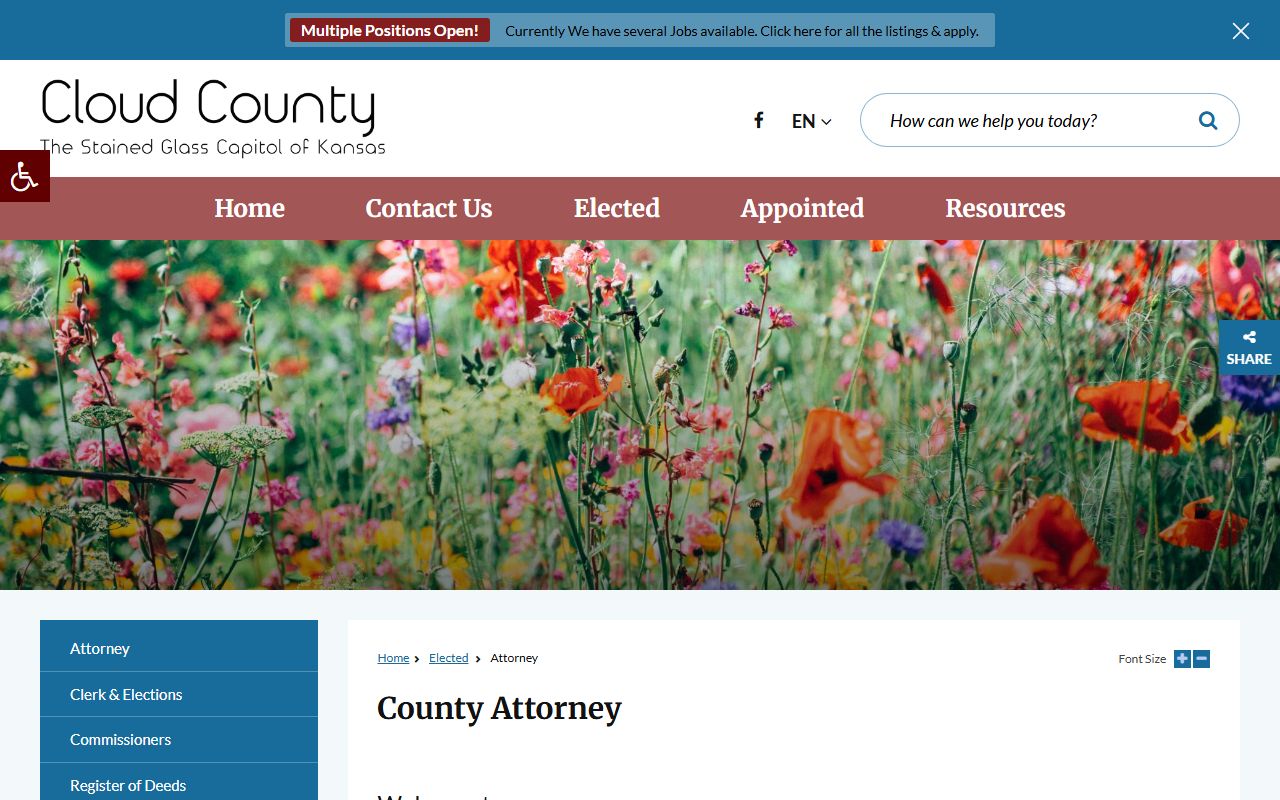
For charge filing, plea, diversion, and prosecution questions in county-filed cases, the County Attorney's role is separate from the Clerk of the District Court's role as record keeper.
What a Cloud County Criminal Court Record Shows
A criminal court record is the case-level file. It can show the filed accusation, the procedural history, court dates, public orders, and the final result. No real Cloud County criminal sample case was opened during research, so this table uses the documented field inventory for Kansas district court criminal records rather than a sample-inspected case.
| Field | What It Shows |
|---|---|
| Case Number | The court-assigned case identifier for the criminal filing; exact Cloud County format was not sample-inspected. |
| Defendant | The person charged in the District Court case, with personal identifiers limited or redacted as required. |
| Charges | The offenses filed by the prosecutor, and later amendments, reductions, dismissals, or added counts when public. |
| Bond | Bond amount, conditions, release activity, or related hearing events where publicly available. |
| Plea | Guilty, not guilty, no contest, or other plea activity entered in the docket. |
| Motions and Hearings | Public pretrial motions, continuances, notices, trial settings, sentencing settings, and court orders. |
| Disposition | The result of a charge or case, such as guilty, dismissed, acquitted, diversion-related dismissal, or judgment entered. |
| Sentence | Jail, prison, probation, fines, fees, costs, restitution, treatment conditions, or supervision terms ordered by the court. |
Charges vs Convictions
A charge is an accusation filed with the court. A conviction is a final outcome after a guilty plea, no-contest plea accepted as a conviction, or trial verdict. A criminal court record can show charges that were dismissed, amended, reduced, diverted, or resolved without a conviction. For the charge-focused path after arrest, use court charge records; for the full criminal case file, stay with the criminal court docket and case record.
| Charge | Conviction | |
|---|---|---|
| Stage | Filed accusation | Final plea or verdict outcome |
| Record Meaning | Shows what the prosecutor alleged | Shows the offense proven or admitted in court |
| Can Change | May be amended, reduced, added, or dismissed | May later be appealed, corrected, or expunged if eligible |
| Search Context | Appears in the case docket when public | Appears in disposition and sentencing entries when public |
Reading Dispositions and Sentences
Disposition is the case result or charge result. In a criminal docket, a disposition may indicate guilty, dismissed, acquitted, amended, diversion completed, or another court outcome. Sentencing entries explain the penalty or supervision imposed after conviction. They may include jail, prison, probation, fines, court costs, restitution, treatment requirements, no-contact orders, or other conditions. Payment balances may appear in eligible cases or payment portals, but financial entries do not replace the sentence order.
If a defendant is currently in custody, the court record may not be enough to show the latest jail status. Cloud County Sheriff's Office and Law Enforcement Center are at 2090 Fort Kearney Street, Concordia. The sheriff is Ken Davis, with office phone 785-243-3636, jail phone 785-243-8164, and dispatch 785-243-3131 listed in the research. Use inmate records sources for custody and visitation information.
Sealed vs Expunged Criminal Records
Sealed and expunged records are not ordinary public search results. A sealed record is hidden from general public access by law or court order. An expunged record under Kansas law limits public access to eligible convictions, arrest records, and diversion agreements after statutory requirements are met and the court grants relief. Expungement does not always erase every government use of the record; certain law-enforcement, licensing, employment, or statutory access can remain.
The K.S.A. 21-6614 expungement statute is the main Kansas provision documented for eligible convictions, arrests, and diversion agreements.
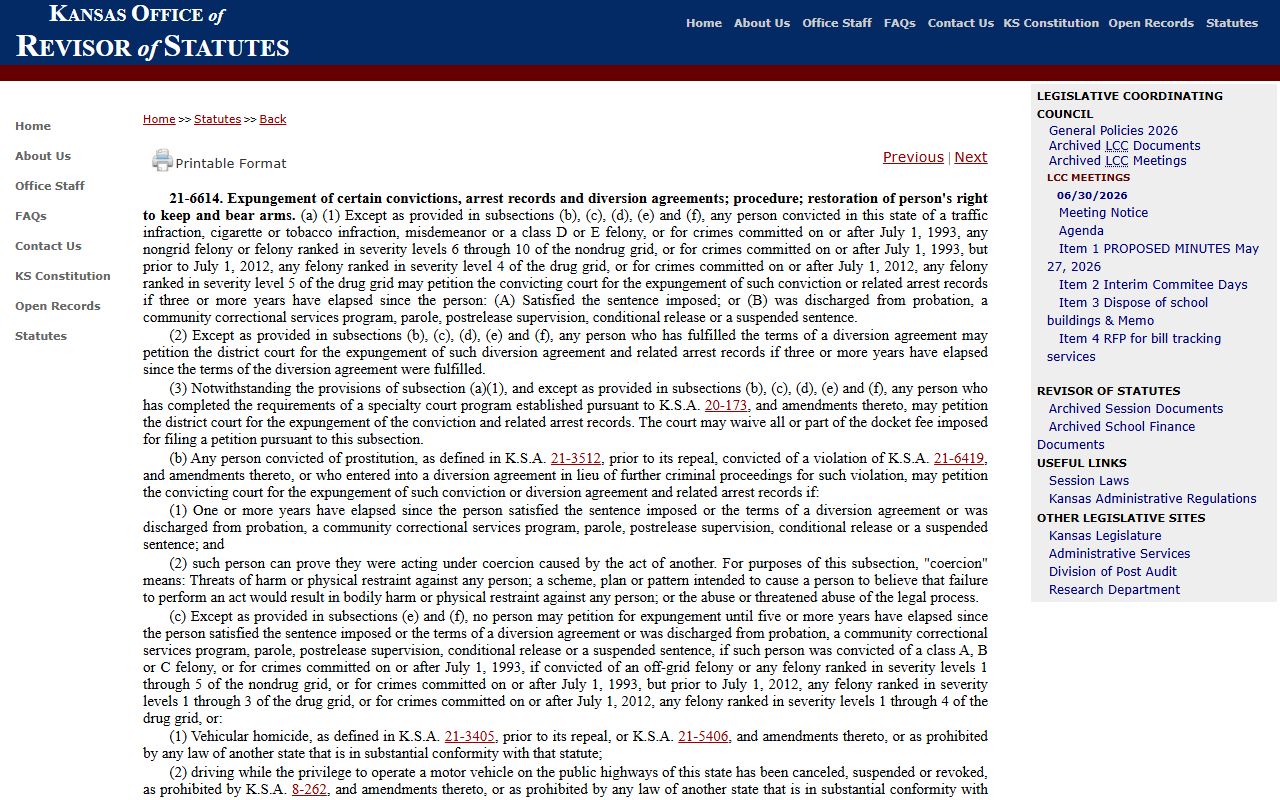
An adult Cloud County expungement request begins in District Court, not with the sheriff, a private background-check site, or a statewide offender registry.
| Sealed | Expunged | |
|---|---|---|
| Visibility | Closed to general public access | Public access limited after court-ordered expungement |
| Authority | Statute, court rule, or judge's order | Kansas expungement statutes and a District Court order |
| Access Afterward | May be available to eligible parties or by court order | May remain available for certain law-enforcement, licensing, employment, or statutory purposes |
| Where to Start | Clerk of the District Court or the judge's order | Petition in the court that handled the conviction, arrest, or diversion |
Public Access to Criminal Court Records
Public access to Cloud County criminal court records comes through Kansas CaseSearch, courthouse access, and the Clerk of the District Court when the record is public. Kansas law also recognizes public-record access through the Kansas Open Records Act, but criminal court records are shaped by court rules, sealing orders, juvenile confidentiality, redaction requirements, and public-safety limits. A public criminal docket can be incomplete if documents are sealed, not digitized, not online, or restricted from electronic access.
Key Statutes and Rules:
K.S.A. 45-215 et seq. - Kansas Open Records Act is the general public-records framework for Kansas public agencies, unless an exemption applies.
Kansas Supreme Court Rule 22 - governs public electronic access to Kansas district and appellate case records.
KBI Criminal History and Offender Registry Difference
A KBI criminal history search is not the same as opening the Cloud County criminal case file. The KBI channel is a statewide criminal history record search. It can be useful for broader background-history purposes, while the District Court case file shows how a specific Cloud County prosecution moved through court. The two sources can answer different questions and can update on different timelines.
The KBI registered offender website is another separate source for sex, violent, and drug offender registration information under Kansas offender registration law.
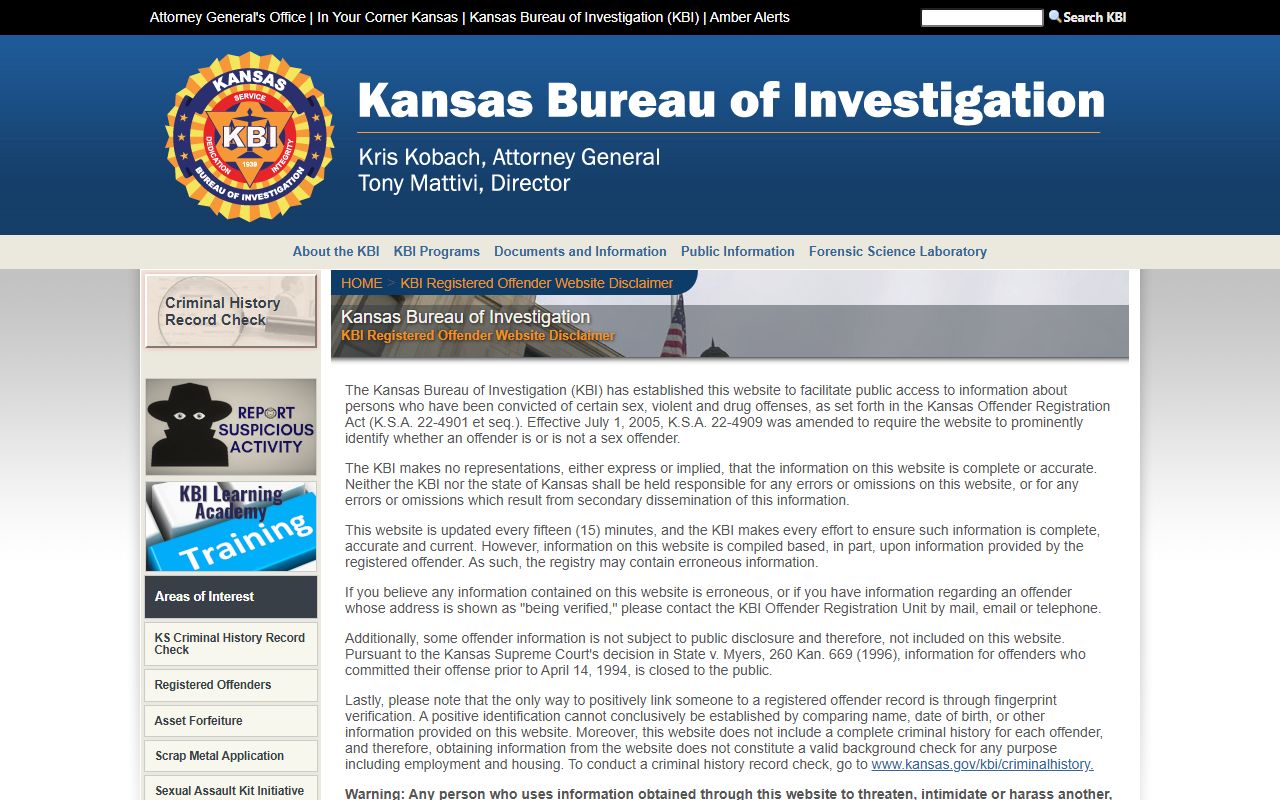
Registration status is not the same thing as the full criminal court record, so confirm charges, pleas, dispositions, and sentencing through the court case when that level of detail is needed.
Background Check Considerations
Casual lookup and official background checks are different. A court docket can help a person understand a public case, but employment, tenant, credit, insurance, and other regulated decisions require lawful screening procedures and compliant sources. A court record may also show allegations that did not end in conviction, dismissed charges, amended charges, or records later limited by expungement. Always verify the current status with the originating government office before relying on a record.
Important: This site is not a consumer reporting agency and must not be used for FCRA-regulated screening decisions.
Restricted Criminal Court Records in Cloud County
Juvenile criminal matters, sealed cases, expunged cases, care-and-treatment material, mental-health information, victim identifiers, minor names, Social Security numbers, financial account numbers, and some protection-order details are not ordinary public criminal docket material. Search results can also omit active warrants, sealed warrants, or information tied to ongoing investigations. For active warrant concerns, use official warrant records channels or contact counsel because web search results may be incomplete and arrest risk can be immediate.
No official Cloud County sheriff or Concordia police mobile app was located in the official sources reviewed. No official Cloud County online active warrant database or jail roster was located either. Those absences affect criminal-record lookup because users may need to combine the court docket, the Clerk of the District Court, the Sheriff's Office, the jail phone, KBI resources, and KDOC resources depending on whether they need a case record, custody status, offender registration, or state correctional status.